




Nuovo Olimpo Review: Ferzan Özpetek’s Italian romantic film released on Netflix on November 2023 after having originally premiered at the Rome Film Festival in October 2023. It stars Damiano Gavino as Enea and Andrea Di Luigi as Pietro in lead roles, alongside Luisa Ranieri as Titti, Greta Scarano as Giulia, Aurora Giovinazzo as Alice, Alvise Rigo as Antonio and Giancarlo Commare.
The Italian film’s release marks the Turkish-Italian filmmaker’s first collaboration with Netflix. It has been written by Ferzan Özpetek and Gianni Romoli, with Gian Filippo Corticelli helming the cinematography. English subtitles and dubbed audio, along with other languages, are available for international audiences, and the movie has been rated ‘A’ for some scenes directly featuring nudity and intimacy.
Nuovo Olimpo Movie Review Contains No Spoilers
Nuovo Olimpo Review
Shot entirely in Rome, Özpetek’s film comes across as a bit of an autobiographical piece, even if the same hasn’t been ostensibly remarked through the film’s credits. It revolves around two men in their mid-twenties who, upon their chance meeting, fall deeply for each other in the late 1970s. Eventually, separated from each other due to protests breaking out in Rome, the two spend the rest of their lives trying to fill each other’s void and grasping every chance to find each other again.
Nouvo Olimpo allows for the unravelling of a gay romance between Enea, a cinema lover and aspiring director, and Pietro, a shy medical student who’s never been with a man before. The two lock eyes with each other on a film set. After that, their meetings continue at a local theatre that only plays classic art films and is also a meeting spot for gay men.
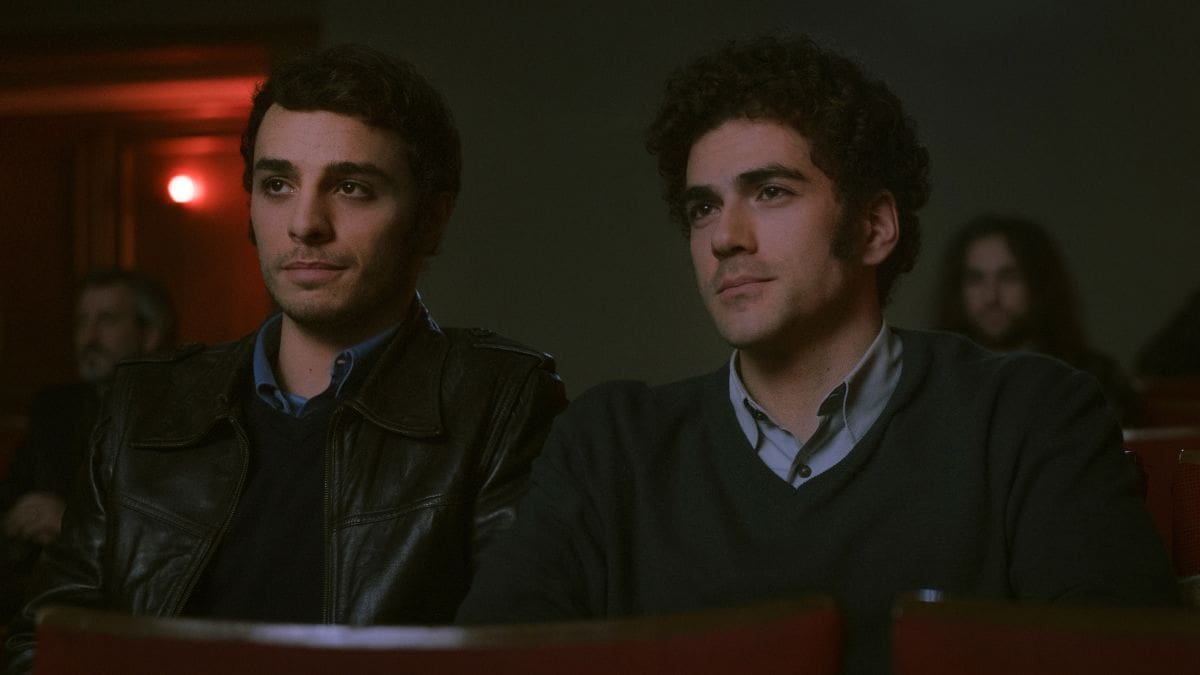
However, that’s not all this movie is about. Through Ferzan Özpetek’s lens, we see it unfold as a love letter to Rome itself, in addition to the art of movies and the profound meanings and essence of human relationships and the emotions they convey. In these artsy moments, the film comes up with its best artsy approach, perhaps. The locations and the rest of the nostalgic and vintage beauties of Rome are captured in a gorgeously beautiful cinematography that ultimately takes the lead as the ultimate highlight of the movie.
However, when it comes down to the story and its characters in the end, it steps back as a lacklustre event that only defines itself as a gay romance and not an overall memorable story that stays with you. Taking on a familiar approach of suggesting a whole track of will-they-won’t-they end up together in the end, the film reaches out to the same old story.
Ferzan Özpetek’s film jumps forward to the future more than once to map out the two protagonists’ lives over the years. Charting out successful arcs for both of them, the film has no interest in diving deep into their characters by treating them as ordinary people; rather, the script only deals with them as gay subjects of a star-crossed romance. This story has already been told several times before, which is why even though Özpetek captures the essence of the pair’s intense affair, it doesn’t drive us hard to root for them actively

A few other characters are introduced to us through these two and the different chapters of their lives. Luisa Ranieri first emerges as an elegant, all-knowing, ever-coiffed, likeable presence in the story. Her eventual breakdown into a lonely individual isn’t fully and openly dissected, leaving us unfulfilled with her in the background as someone left behind over time. Aurora Giovinazzo’s Alice also shares an intriguing, almost soulmates-like relationship with Damiano Gavino’s Enea, but the layered impressions of it are never unravelled.
Then comes Greta Scarano as Giulia, possibly one of the most interesting characters in the lot, who dares to question her husband Pietro about love and his commitment to her and their relationship. But she alone can only push too many buttons. Although the film raises a good impression about the leading men still remembering a love from their past despite all the time and lives that pass following their separation, the way it’s ultimately breathed into life comes across as a flat and forgettable ordeal.
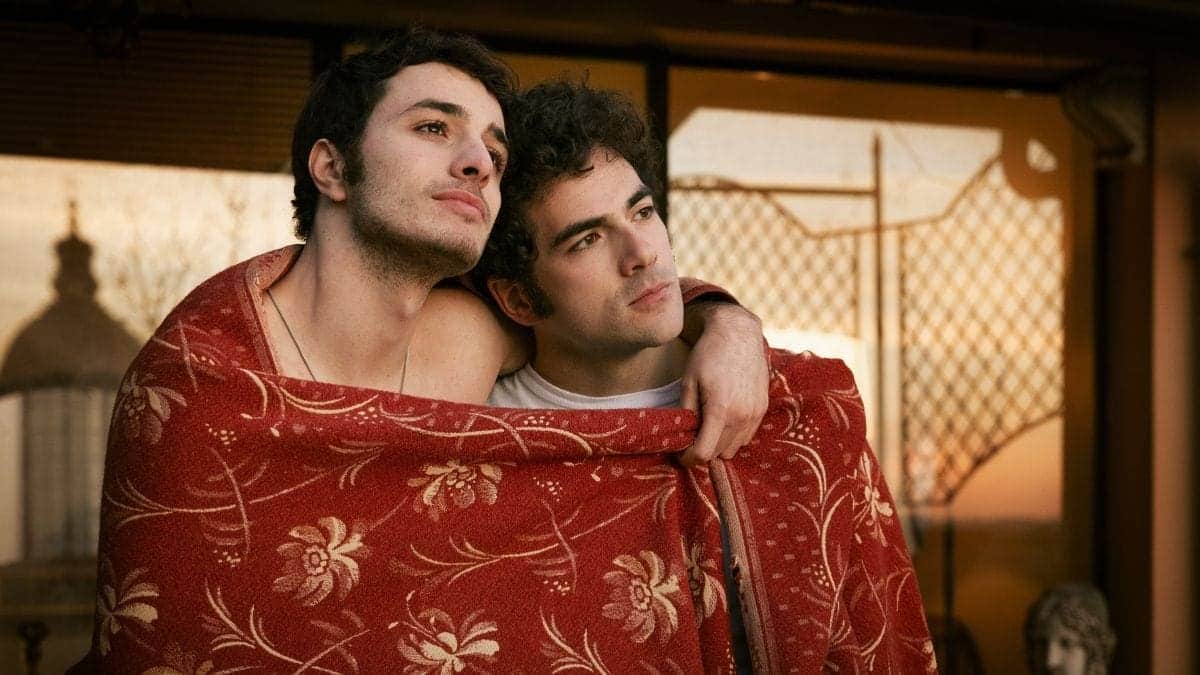
From the beginning to the end, the Netflix film is so preoccupied with the idea of its leading characters’ love story that even after jumping forward to the future several times, other relationships in their lives barely work their magic to convolute and complicate the scene. The path taken by the movie and its ending barely leave anything up for your curiosity; it rather simply feeds you the awaited ending, yet it still doesn’t feel tasteful enough.
Nuovo Olimpo Netflix Film: Final Thoughts
There’s a line in the movie said by Enea, almost as if he’s reflecting Özpetek’s creative jargon and disposition. On being asked at a press conference, “Why is it that your movies often address the topic of homosexuality?” Enea replies, “I don’t address it often, actually.Everyone else just never does.”
While it deserves applause for good reason, we must now also consider how directors are addressing this topic and other intertwined themes, which further pushes the point that delivering a simple gay romance isn’t all that’s needed to create ripples anymore. The story and its characters have to be compelling enough to move you. Even though Özpetek has brought other films with homosexuality at their centre, Nuovo Olimpo doesn’t quite deliver a noteworthy result.
Also read: Wingwomen Review: Mélanie Laurent’s Crime-Comedy is Extremely Watchable